macOS app
APEX Lab · Mac racing simulator
A native racing simulator prototype for Apple Silicon with eight cars and six original circuits. 3.0 Preview 24 improves braking while turning, engine response when lifting off, per-wheel tyre audio and sound positioning across camera views.
🏁
Overview
- 240 Hz physics with 720 Hz internal substeps — per-wheel contact forces, springs and dampers, body roll and pitch, a limited-slip differential and per-car drivetrains
- Tyres that change as you drive — soft, medium and hard compounds, separate tread and carcass temperatures, hot pressures, wear, flat spots and blowouts, all feeding into grip
- Crashes damage the bodywork, each corner's suspension and the engine depending on the direction of the hit, changing power, cooling and downforce, and the car visibly deforms. Repairs and a tyre change take 12 seconds once you reach the pit box
- Telemetry like a real race car — each tyre's temperature, pressure and tread, every corner's suspension travel and load, and a G meter with a trail; on the left, the car's condition, damage by area and how hard ABS and TCS are working
- Eight cars and six circuits, with separate wet and dry practice records, a two-lap sprint and a compact cockpit HUD
SwiftSceneKitMetalCore HapticsmacOS
- Type
- macOS app
- My role
- Design · development
- Date
- 2026.11
- Status
- In progress
Screenshots
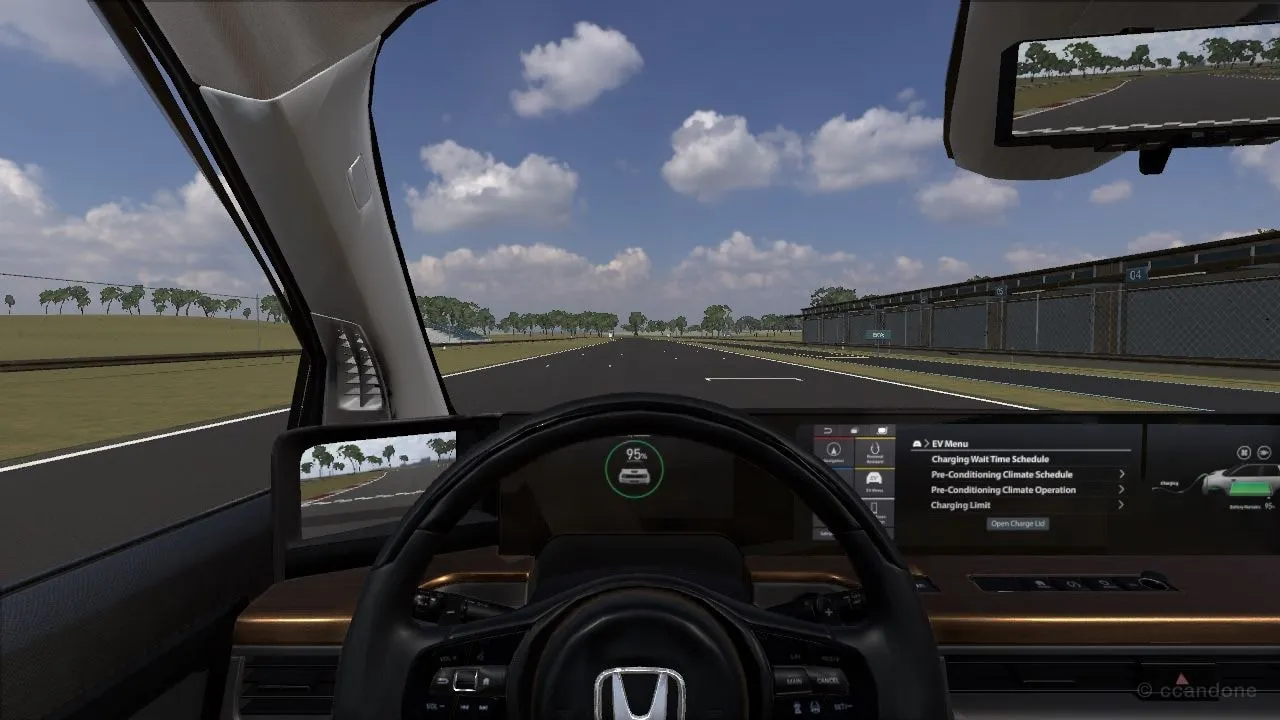
Honda e cockpit and digital mirror displays. Model: Alex Murias, CC BY 4.0, adapted for APEX Lab 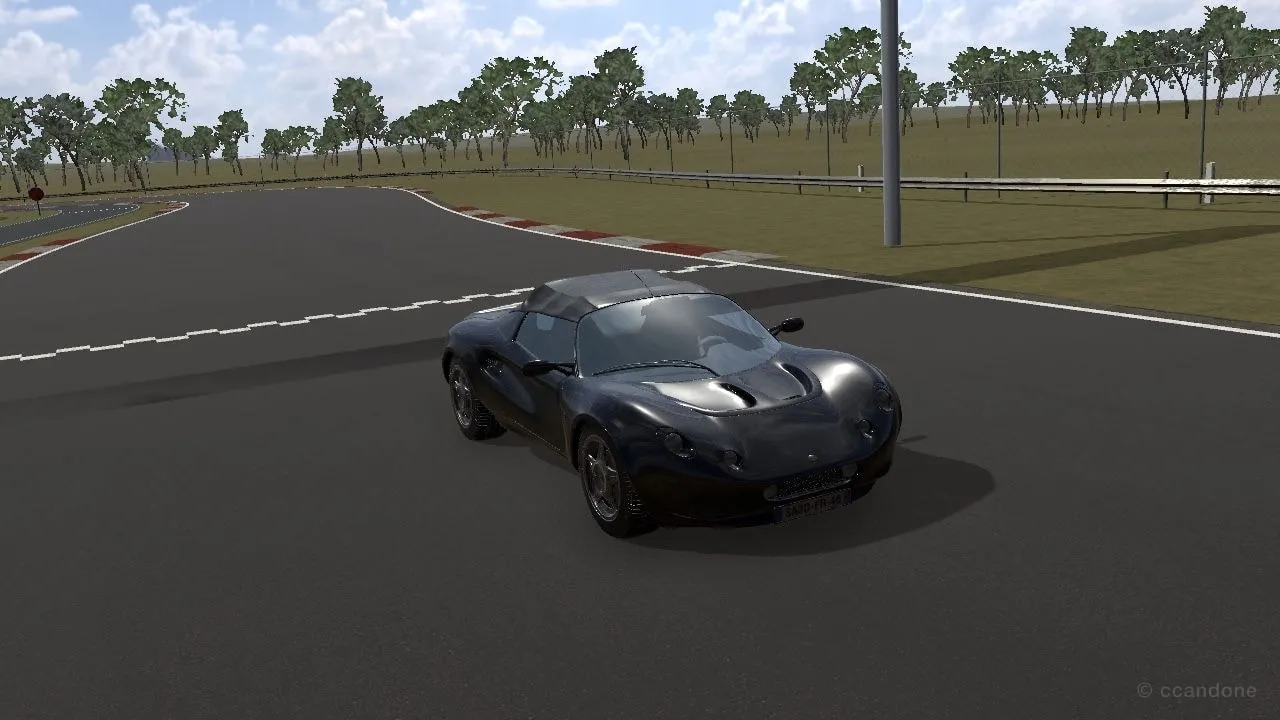
Lotus Elise exterior. Model: Stéphane Agullo, CC BY 4.0, adapted for APEX Lab 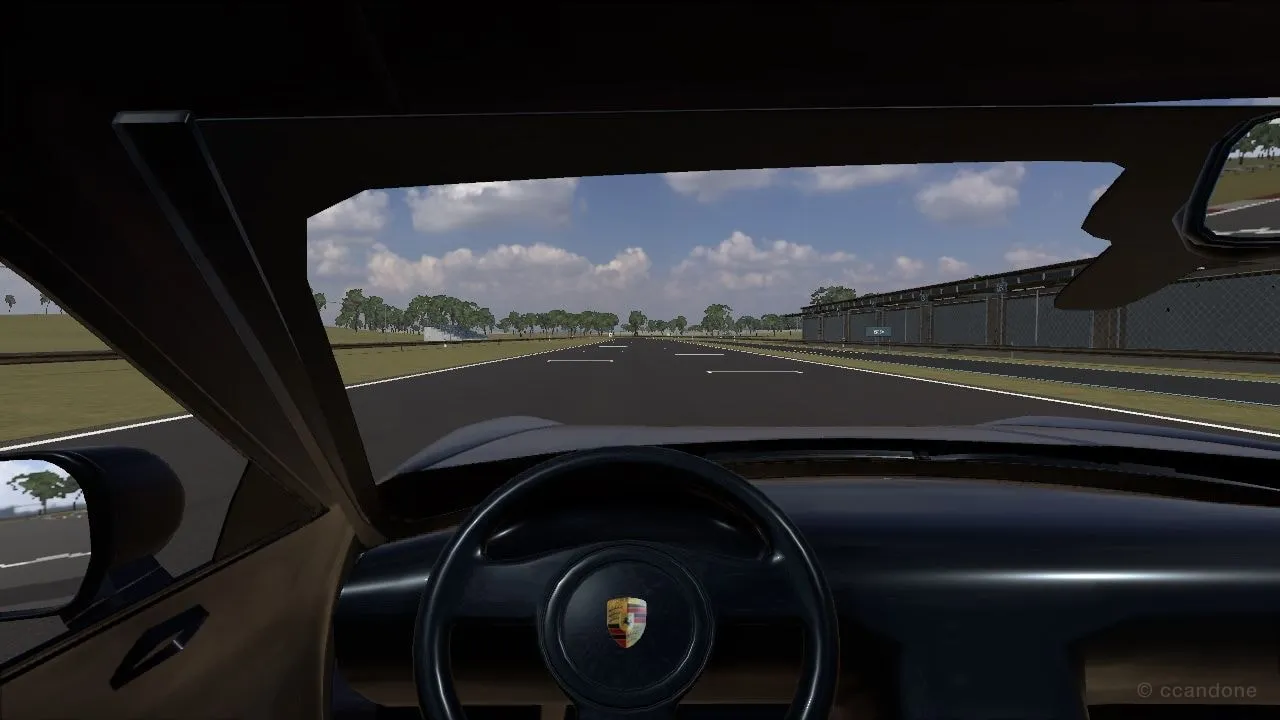
Porsche 911 Carrera 4S (992) cockpit. Model: JK3Dstudios, CC BY 4.0, adapted for APEX Lab 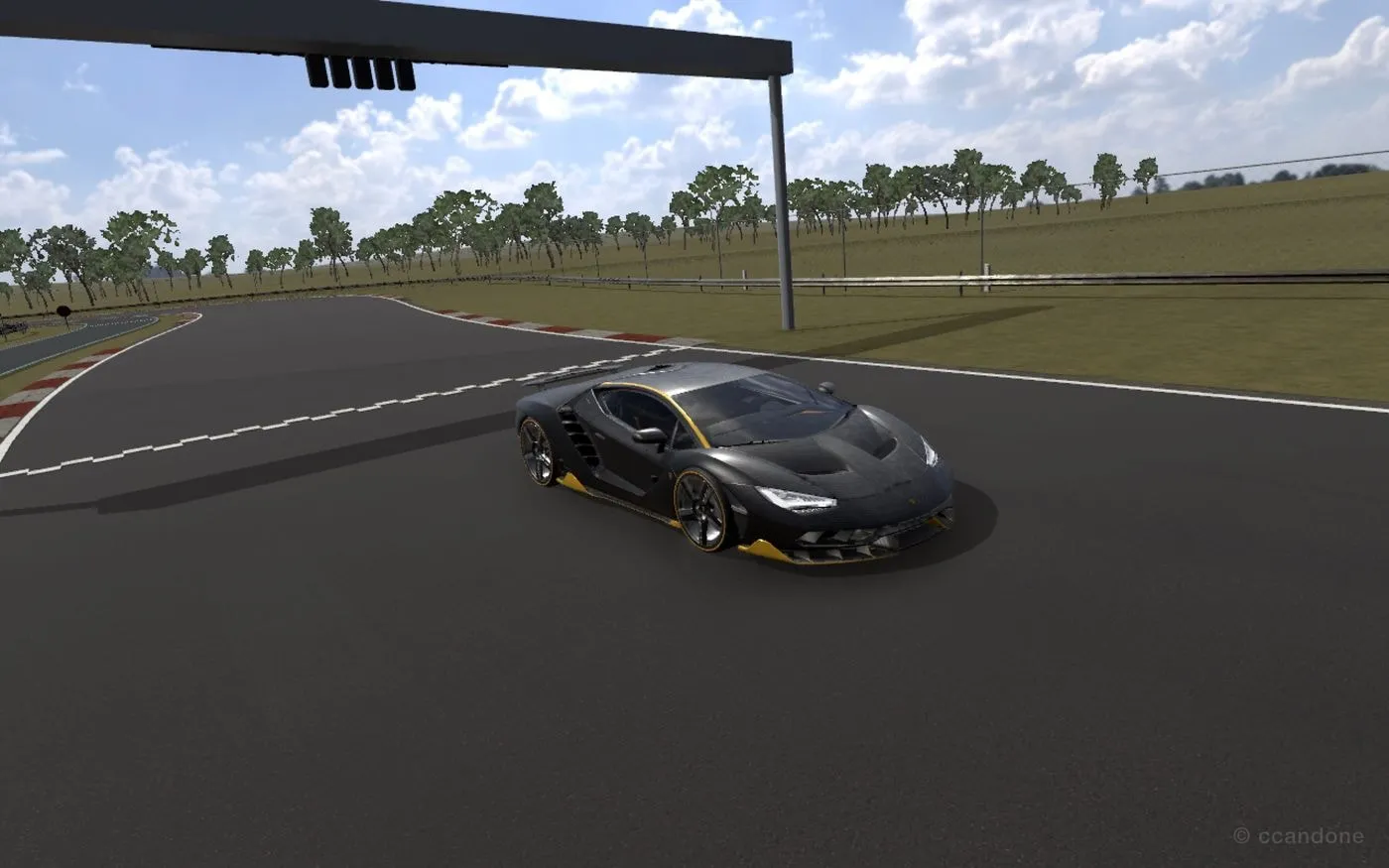
Lamborghini Centenario chase view. Model and textures: SDC PERFORMANCE, CC BY 4.0, adapted for APEX Lab 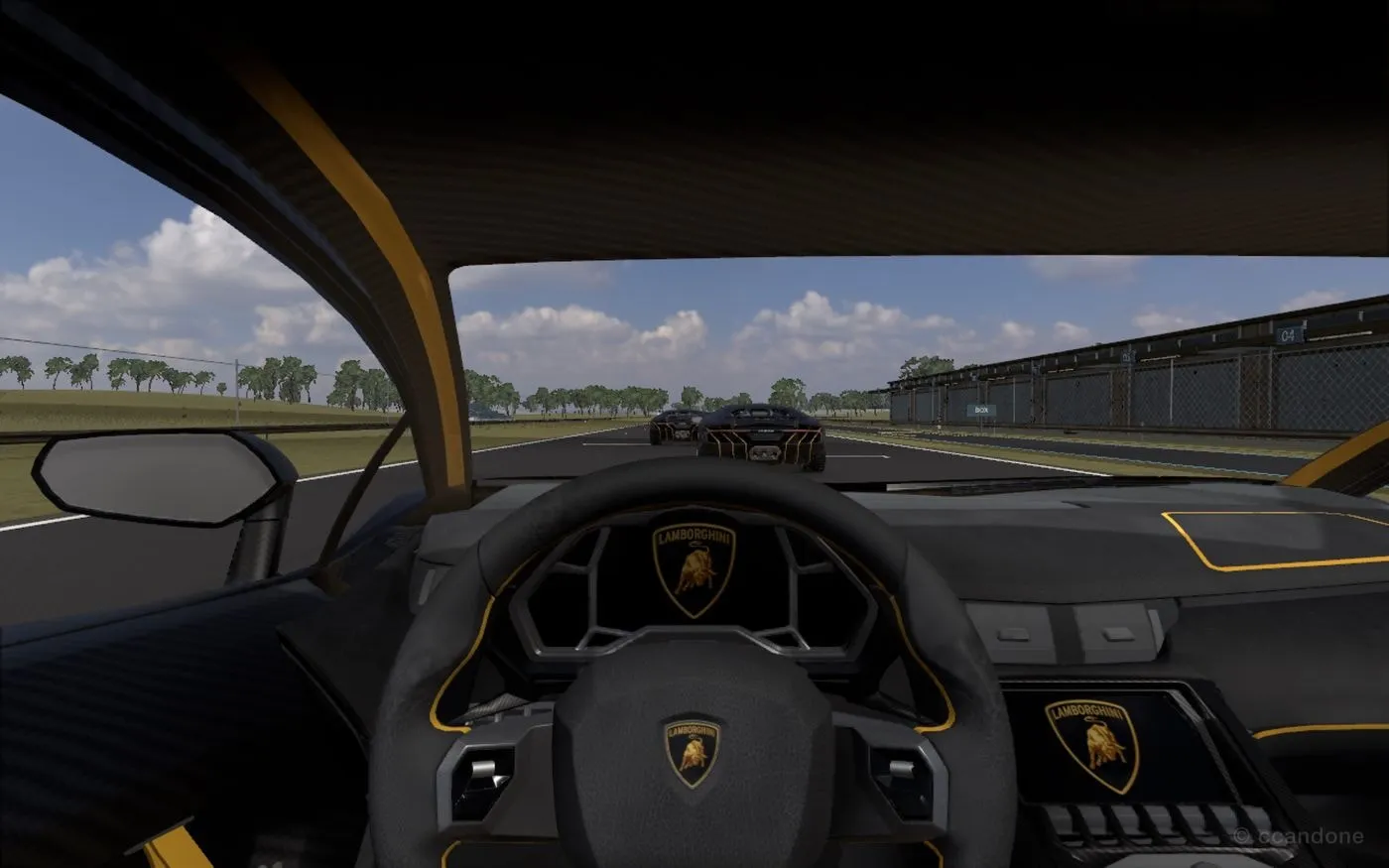
Lamborghini Centenario cockpit. Model and textures: SDC PERFORMANCE, CC BY 4.0, adapted for APEX Lab 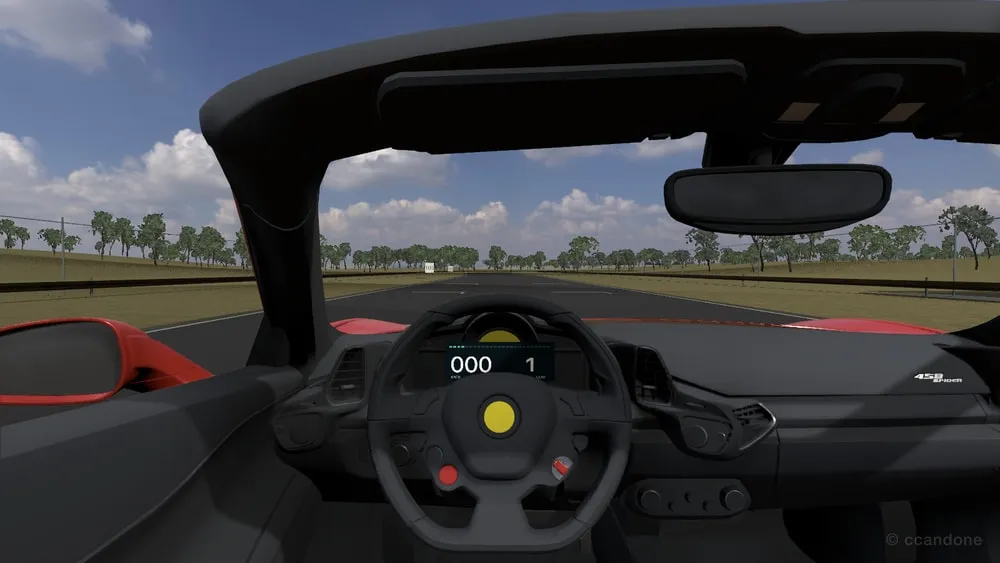
Ferrari 458 cockpit view. Model: vicent091036, CC BY 4.0 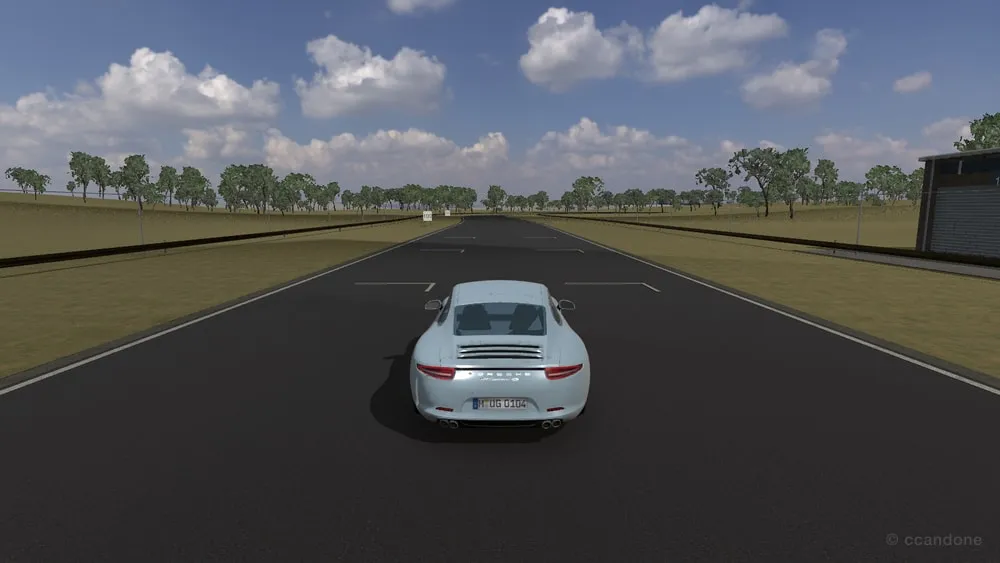
Porsche 911 Carrera 4S chase view from 1.2–1.13. Model: Lionsharp Studios / Karol Miklas, CC BY-SA 4.0 (the adapted appearance too) 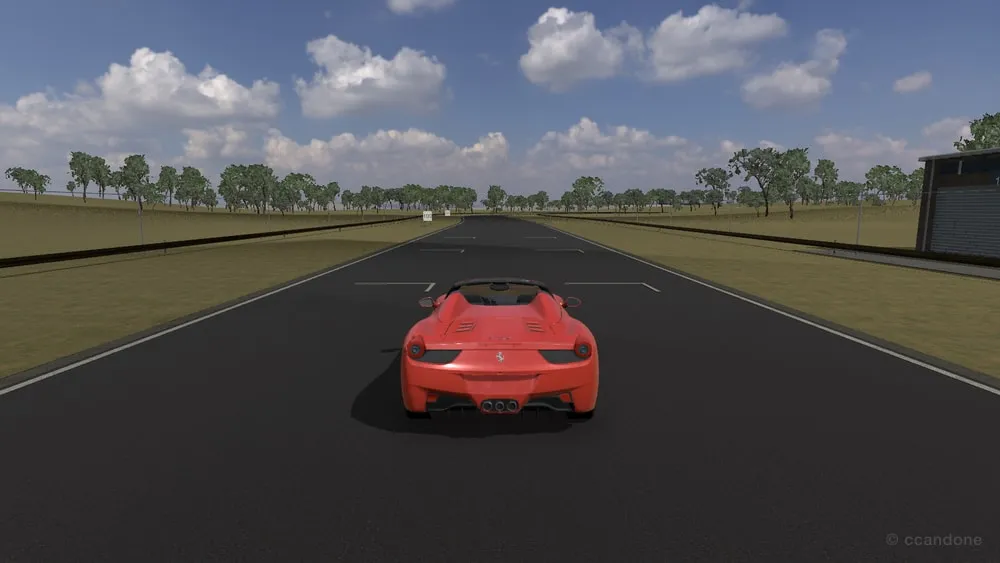
Ferrari 458 chase view on the North Loop. Model: vicent091036, CC BY 4.0
Taken from the running app. Tap one to see it full size.
Why I’m building it
I play a lot of sim racing, and I wanted to know how grip, weight transfer and tyre temperature actually get worked out. The best way to find out was to write one: no ready-made game engine, starting from the physics and adding to it until it could be driven, lapped, crashed and repaired.
What’s in it
- Circuits: six original closed circuits — North Loop (1.45 km), Club Sprint (1.23 km), Technical Park (1.59 km), Grand Circuit (2.29 km), Ridge Ring (2.40 km) and Valley Circuit (1.82 km) — each with kerbs, run-off, guardrails, braking boards and a pit area, plus a live map showing the start line and where the car is and which way it faces.
- Cars: Concept GT, Ferrari 458, Porsche 911 Carrera 4S, BMW M3 E30, Mazda MX-5, Lamborghini Centenario, Lotus Elise and Honda e. The Porsche and Centenario use experimental all-wheel drive, and the Honda e has a single-speed drivetrain.
- Views: cockpit, dashboard, bonnet, bumper, near chase and far chase, switchable at any time and previewed on the start screen. You can look left and right from the cockpit, where a live rear-view mirror lights up to warn of nearby traffic. Supported cars show live reflections or feeds on their original mirrors and screens. The start screen lets you choose a car, circuit and road condition. You can move the HUD panels, switch to a compact layout, and preview seat height and field of view.
- Practice timing: see your time gap to your best lap at the same point on the circuit, plus three sector splits and a racing line that changes colour with your speed. Valid best laps, splits and ghosts are saved by car, circuit and road condition.
- Wet practice and sprints: practise on rain tyres with changing water depth, or race up to three computer opponents from a standing start in a two-lap offline sprint with live position and pit penalties.
- Traffic and auto-drive: add up to three computer opponents or switch on auto-drive to watch the racing line. Throttle, brake or steering input hands control back to you. Laps driven with auto-drive don’t count toward a personal best.
- Pit lanes: all six circuits have a drivable pit lane with a 60 km/h limiter. Stop in the pit box for repairs and tyres, or use the tow option if the car can’t make it back.
- Assists: ABS and traction control each run from 0 to 5 (0 is off, 3 is the default), and the level really changes the lock-up and wheelspin thresholds and how hard brake pressure or torque is cut; press 1 or 2 while driving to change them, and the screen shows how much they’re stepping in. The gearbox has neutral and reverse, brake bias is saved per car, and the controller dead zone is adjustable.
- Car condition: the left side shows mass, drivetrain, water temperature, available power, damage by area, slip and distance.
- Sound and rumble: engine sound follows revs, drivetrain load and lift-off. The Honda e’s pitch follows motor speed. Each tyre responds independently to slip and surface water, and turning your head or changing cameras changes how the car sounds. Compatible controllers relay kerbs, slides and crashes.
- Live telemetry: a four-wheel diagram laid out left to right shows each tyre’s temperature, hot pressure, remaining tread, the surface it’s on and blowout warnings; the four springs compress and extend, labelled with travel from static ride height (mm) and wheel load (kN); and a G meter shows lateral and longitudinal acceleration with a trail of about 1.5 seconds.
- Kerbs: each wheel checks for a kerb on its own, so only the side that’s on it gets shaken, and the suspension, visuals, kerb rumble sound and controller vibration all come from the same contact data.
- Telemetry log: each practice records speed, pedals, acceleration, tyre temperatures, pressures, wear, suspension travel, wheel loads, kerb strength, damage, car, circuit, assist levels and how much they stepped in at 10 Hz into a CSV to dig through. The in-app practice analysis can compare speed, pedal input and brake pressure at a specific point.
The physics
- The main step runs at 240 Hz with substeps at 720 Hz, working out wheel speed, combined slip and contact force for each wheel. The front wheels use Ackermann steering (the inside wheel turns a little more), and tyre side force builds with a relaxation lag rather than snapping in instantly.
- Each corner has its own spring and damper, with front and rear anti-roll bars. The body heaves, rolls and pitches, load changes affect grip, and brakes fade as they overheat.
- Tyres have separate tread and carcass temperatures, pressure that rises with heat, wear, flat spots from locking up, and blowouts. Cold pressure is adjustable from 1.30 to 2.10 bar.
- Guardrail hits are scored by direction and speed, affecting wheel alignment, damping, power, cooling, drag and downforce, and the nose, tail, wing and wheels change to match.
- It’s still an experimental prototype: the four-wheel model isn’t a full multibody solver, and it doesn’t claim the realism of a commercial simulator.
Tech
- Swift with SceneKit / Metal, Game Controller for input, Core Haptics for rumble and AVFoundation for sound, on Apple Silicon with macOS 14 or later.
- The Preview 24 validation records 790 passing regression checks, including 32 for audio. It includes the same driving sequence across all eight cars and an MX-5 cockpit sample. Audio samples and validation notes
- It’s an independent, original project, not a port of any commercial simulator, and uses none of their code, cars or circuits.
- Vehicle model credits and adaptations include JK3Dstudios (Porsche 992), Stéphane Agullo (Lotus Elise) and Alex Murias (Honda e), all under CC BY 4.0. The historical Porsche screenshot credits its original CC BY-SA 4.0 model in the caption.
Progress
- Drivable four-wheel physics, the circuit, cockpit and chase views
- Lap timing, ghost car, telemetry
- 1.0: tyre condition, collision damage and pit service
- 1.1: tyre and suspension telemetry, a G meter, kerb feedback per wheel
- 1.2: two licensed cars, the Ferrari 458 and Porsche 911, and six views
- 1.3: ABS / TCS levels 0–5, the car condition panel, four circuits and a track map
- 1.4: fixed the Porsche’s wobbling front wheels, added Ackermann steering and tyre relaxation
- 1.5–1.6: suspension and brake feedback, pedal traces, sector timing and racing line
- 1.7–1.9: computer opponents, auto-drive, movable HUD, BMW M3 E30, Mazda MX-5, two new circuits, neutral and reverse
- 1.10–1.13: drivable pit lanes, cockpit mirror, track surface detail and Lamborghini Centenario
- 2.0: wet practice, rain tyres, offline sprints, drafting and brake analysis
- 3.0 Preview 20: eight cars, original mirrors and digital displays, a redesigned start screen and grouped settings
- 3.0 Preview 21–24: reworked combined braking and cornering forces, engine and road audio, per-wheel tyre sounds and camera-dependent sound positioning
- Verify rumble and compatibility across physical Xbox controller models
- The code is public on GitHub, but doesn’t have an open-source licence yet